
Description
Product Description
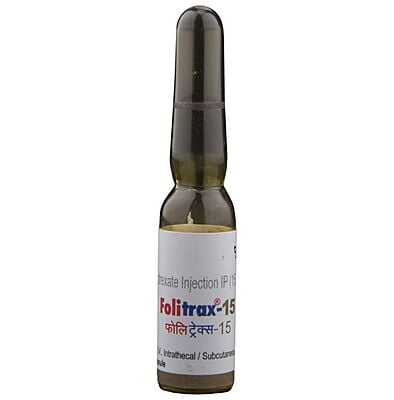
Folitrax 15 Injection is a parenteral formulation of Methotrexate, a medicine that suppresses abnormal immune activity and interferes with cell growth. Ipca Laboratories Ltd. markets the product in India.
Methotrexate is used in very different clinical settings, including severe rheumatoid arthritis, severe psoriasis and certain cancers. The same medicine can therefore have very different treatment plans depending on the diagnosis. In autoimmune disorders, it works mainly by reducing excessive immune-cell activity, whereas in cancer therapy its ability to interfere with rapidly dividing cells is used as part of specialist treatment.
Because Methotrexate has a narrow safety margin, the injection must be administered under qualified medical supervision. Appropriate laboratory monitoring is often required during treatment, particularly when therapy is continued for an extended period.
Uses
- Treatment of rheumatoid arthritis when Methotrexate is considered appropriate.
- Management of severe psoriasis that requires systemic therapy.
- Treatment of certain cancers as part of specialist chemotherapy protocols.
- May be prescribed for selected inflammatory or autoimmune disorders under specialist supervision.
- May be used in other approved clinical situations when a doctor determines that Methotrexate is appropriate.
Key Benefits
- Provides Methotrexate in an injectable formulation for supervised treatment.
- Reduces excessive immune activity in selected autoimmune conditions.
- Interferes with folate-dependent cellular processes and DNA synthesis.
- Can be incorporated into specialist treatment protocols for certain cancers.
- Allows parenteral administration when an injectable route is medically preferred.
How to Use
- Folitrax 15 Injection must be administered by a doctor, nurse or other qualified healthcare professional.
- Use the medicine exactly as prescribed by your doctor.
- The route of administration and treatment schedule depend on the condition being treated.
- Do not self-inject or allow the medicine to be administered without appropriate medical supervision.
- Do not change the prescribed amount or timing on your own.
- Continue laboratory tests and follow-up appointments recommended during treatment.
- Tell your healthcare team about all medicines, vitamins and supplements you use before receiving the injection.
How It Works
Methotrexate blocks dihydrofolate reductase and interferes with folate-dependent biochemical reactions needed for DNA synthesis and cell proliferation. At the lower, intermittent exposures used in some inflammatory conditions, it also produces immunomodulatory effects that reduce excessive immune-cell activity and inflammatory signalling. In cancer treatment, its inhibition of rapidly dividing cells is used to limit the growth and multiplication of malignant cells. The clinical effect and required monitoring vary substantially with the indication.
Side Effects
- Nausea or vomiting.
- Loss of appetite.
- Abdominal pain or indigestion.
- Mouth ulcers.
- Tiredness or weakness.
- Headache or dizziness.
- Hair loss.
- Skin rash.
- Changes in liver-function tests.
- Reduction in blood-cell counts.
- Injection-site irritation may occur.
Contact your doctor promptly if symptoms are severe, persistent or unusual.
Precautions & Warnings
- Methotrexate can cause severe, potentially fatal toxicity, including bone-marrow suppression, serious infections, liver injury, kidney injury and gastrointestinal toxicity. Accidental or inappropriate frequent dosing can result in life-threatening complications. Use only under the exact medical regimen prescribed and seek urgent medical attention for fever, severe weakness, unusual bleeding, mouth ulcers, persistent vomiting, yellowing of the skin or eyes, or markedly reduced urine output.
- Methotrexate can cause serious fetal harm and is contraindicated during pregnancy for non-oncology indications. Women who could become pregnant should discuss effective contraception and pregnancy planning with their doctor before treatment.
- Tell your doctor if you have liver disease, kidney disease, blood-cell disorders, active infections or a history of significant alcohol consumption.
- Methotrexate can reduce blood-cell production. Your doctor may monitor blood counts regularly during treatment.
- Liver-function tests may be required because Methotrexate can cause hepatotoxicity, particularly during prolonged treatment or in patients with additional risk factors.
- Tell your doctor if you have previously had liver disease, hepatitis or other conditions affecting the liver.
- Some medicines can increase Methotrexate toxicity or alter its elimination. Tell your doctor about antibiotics, NSAIDs, acid-reducing medicines, anti-seizure medicines, other immunosuppressants and all other treatments you use.
- Avoid excessive alcohol because it can add to the risk of liver injury.
- Live vaccines may not be appropriate during Methotrexate treatment. Discuss vaccination with your doctor before receiving any vaccine.
- Inform your doctor if you have lung disease or develop a new persistent cough, fever or difficulty breathing because Methotrexate can rarely cause serious lung toxicity.
- Tell your doctor if you have a history of stomach ulcers, inflammatory bowel problems or other significant gastrointestinal disease.
- Folic acid or folinic acid may be prescribed alongside Methotrexate in some treatment plans to reduce selected adverse effects. Use it only as directed by your doctor.
- Breastfeeding is generally not recommended during Methotrexate treatment. Discuss the appropriate approach with your doctor.
- Do not stop or modify long-term Methotrexate therapy without medical advice.
- Seek immediate medical attention for severe rash, difficulty breathing, persistent fever, significant bleeding, severe mouth ulcers, confusion or other signs of serious toxicity.
Storage Instructions
- Store below 25°C.
- Keep the injection in its original packaging until use.
- Protect from excessive heat and direct light.
- Do not freeze the medicine.
- Keep out of reach and sight of children.
- Inspect the solution before administration and do not use it if the appearance is abnormal.
- Do not use after the expiry date printed on the package.
FAQs
Q: What is Folitrax 15 Injection used for?
A: Folitrax 15 Injection is used for selected cases of rheumatoid arthritis, severe psoriasis and certain cancers, depending on the treatment plan prescribed by the specialist.
Q: What does Folitrax 15 Injection contain?
A: It contains Methotrexate 15 mg/ml.
Q: Is Folitrax 15 Injection a prescription medicine?
A: Yes. Folitrax 15 Injection is a prescription medicine and must be administered under qualified medical supervision.
Q: Can Folitrax 15 Injection be self-administered?
A: No. The injection should be administered by a healthcare professional according to the prescribed route and treatment plan.
Q: Why are blood tests needed during Methotrexate treatment?
A: Methotrexate can affect blood-cell production, liver function and kidney function. Regular monitoring helps your doctor identify toxicity and determine whether treatment needs adjustment.
Q: Who manufactures Folitrax 15 Injection?
A: Folitrax 15 Injection is marketed by Ipca Laboratories Ltd. The listed presentation contains 1 ml of injection.



Reviews
There are no reviews yet.