

Description
Product Description
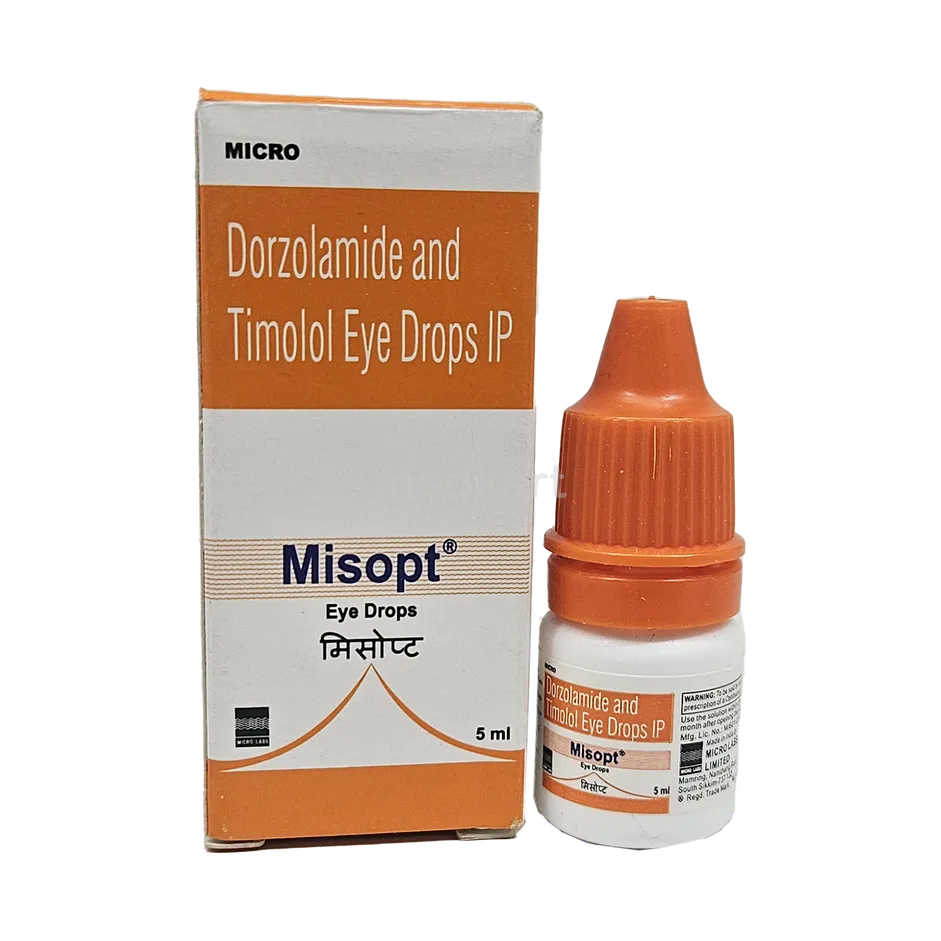
Misopt Eye Drop combines two medicines that lower intraocular pressure through different mechanisms. Dorzolamide inhibits carbonic anhydrase in the eye, while Timolol is a beta-blocker that reduces aqueous humour formation.
This dual action helps decrease the amount of fluid produced inside the eye and, as a result, lowers intraocular pressure. Maintaining appropriate eye pressure is important in glaucoma because persistently elevated pressure can damage the optic nerve over time.
Misopt is intended for regular ophthalmic use according to the treatment plan given by an eye specialist. It is not designed to provide temporary relief from ordinary eye redness, itching or irritation.
Uses
- Treatment of open-angle glaucoma.
- Management of ocular hypertension.
- Helps reduce elevated intraocular pressure.
- May be prescribed when treatment with a single pressure-lowering eye drop is not sufficient.
- Used for long-term pressure control when the combination is considered appropriate by an ophthalmologist.
Key Benefits
- Combines two pressure-lowering medicines in one eye-drop formulation.
- Dorzolamide decreases aqueous humour production through carbonic anhydrase inhibition.
- Timolol reduces aqueous humour formation through beta-adrenergic receptor blockade.
- Provides dual-action reduction of intraocular pressure.
- Convenient ophthalmic formulation for prescribed glaucoma management.
How to Use
- Use Misopt Eye Drop exactly as prescribed by your ophthalmologist.
- Wash your hands before applying the drops.
- Tilt your head back and gently pull down the lower eyelid to create a small pocket.
- Instil the prescribed number of drops without allowing the dropper tip to touch the eye, eyelids or surrounding skin.
- Close the eye gently after application and avoid blinking forcefully.
- Applying gentle pressure to the inner corner of the closed eye for about one minute may reduce the amount of medicine entering the bloodstream.
- If you use more than one eye medicine, keep the interval recommended by your ophthalmologist between different products.
- Remove contact lenses before application if advised, and follow your doctor’s instructions about when they can be replaced.
- Do not stop treatment simply because your eyes feel normal; glaucoma often requires continued pressure control.
How It Works
Dorzolamide reduces the activity of carbonic anhydrase in the ciliary processes of the eye, decreasing the formation of bicarbonate and reducing aqueous humour production. Timolol blocks beta-adrenergic stimulation in the eye and also lowers aqueous humour formation. Since both medicines act through different pathways, their combined use can produce a greater reduction in intraocular pressure than either mechanism alone. Lowering pressure helps reduce the mechanical stress placed on the optic nerve in glaucoma.
Side Effects
- Burning or stinging after application.
- Temporary blurred vision.
- Eye irritation or discomfort.
- Dryness of the eyes.
- Redness of the eyes.
- Headache.
- Bitter or unusual taste in the mouth.
- Eyelid inflammation.
- Tiredness or weakness.
- Dizziness.
- Slow heartbeat may occur in susceptible patients.
Contact your ophthalmologist if side effects persist, become severe or interfere with normal activities.
Precautions & Warnings
- Timolol is a beta-blocker and may cause serious breathing or cardiovascular problems. Misopt is contraindicated in patients with bronchial asthma or a history of bronchial asthma, severe chronic obstructive pulmonary disease, sinus bradycardia, certain heart-block disorders, overt cardiac failure or cardiogenic shock unless a specialist specifically determines otherwise. Seek urgent medical attention for severe breathing difficulty, wheezing, fainting or marked slowing of the heartbeat.
- Tell your doctor if you have asthma, chronic respiratory disease, heart failure, low heart rate, low blood pressure or any cardiac conduction problem.
- Dorzolamide is a sulfonamide derivative. Tell your doctor about any previous serious reaction to sulfonamide medicines.
- Inform your doctor if you have kidney disease or a history of kidney stones.
- Beta-blocker eye drops can sometimes mask warning signs of low blood sugar in people with diabetes. Tell your doctor if you have diabetes or episodes of hypoglycaemia.
- Timolol may interact with other beta-blockers, heart medicines and medicines that affect blood pressure or cardiac conduction. Provide your complete medication list.
- Tell your doctor before using Misopt if you are taking oral carbonic anhydrase inhibitors or other glaucoma medicines.
- Do not touch the dropper tip to your eye or any other surface because contamination can introduce infection into the bottle.
- If temporary blurred vision occurs after application, avoid driving or operating machinery until your vision becomes clear.
- Tell your ophthalmologist if you wear contact lenses.
- Consult your doctor before using Misopt during pregnancy or breastfeeding.
- Do not discontinue glaucoma treatment suddenly without medical advice, as intraocular pressure may rise again.
- Seek prompt medical attention for severe eye pain, sudden visual deterioration, marked swelling, breathing difficulty, fainting or an unusually slow heartbeat.
Storage Instructions
- Store below 25°C unless the product label specifies otherwise.
- Keep the bottle tightly closed when not in use.
- Protect from excessive heat and direct sunlight.
- Do not allow the dropper tip to touch the eye or other surfaces.
- Keep the bottle in its original packaging.
- Keep out of reach and sight of children.
- Follow the product label regarding how long the bottle can be used after opening.
- Do not use the eye drops after the expiry date printed on the package.
FAQs
Q: What is Misopt Eye Drop used for?
A: Misopt is prescribed to lower elevated intraocular pressure in conditions such as open-angle glaucoma and ocular hypertension.
Q: What does Misopt Eye Drop contain?
A: It contains Dorzolamide Hydrochloride 2% w/v and Timolol Maleate 0.5% w/v.
Q: Is Misopt Eye Drop a prescription medicine?
A: Yes. Misopt Eye Drop is a prescription ophthalmic medicine and should be used under the supervision of an eye specialist.
Q: Can Misopt cause blurred vision?
A: Temporary blurred vision can occur after applying the drops. Avoid driving until your vision becomes clear again.
Q: Can people with asthma use Misopt Eye Drop?
A: Timolol can affect the respiratory system and may cause serious bronchospasm. People with asthma or significant breathing disorders should inform their ophthalmologist before using Misopt.
Q: Who manufactures Misopt Eye Drop?
A: Misopt Eye Drop is marketed by Micro Labs Ltd. The commonly listed presentation contains 5 ml.

Reviews
There are no reviews yet.