

Description
Product Description
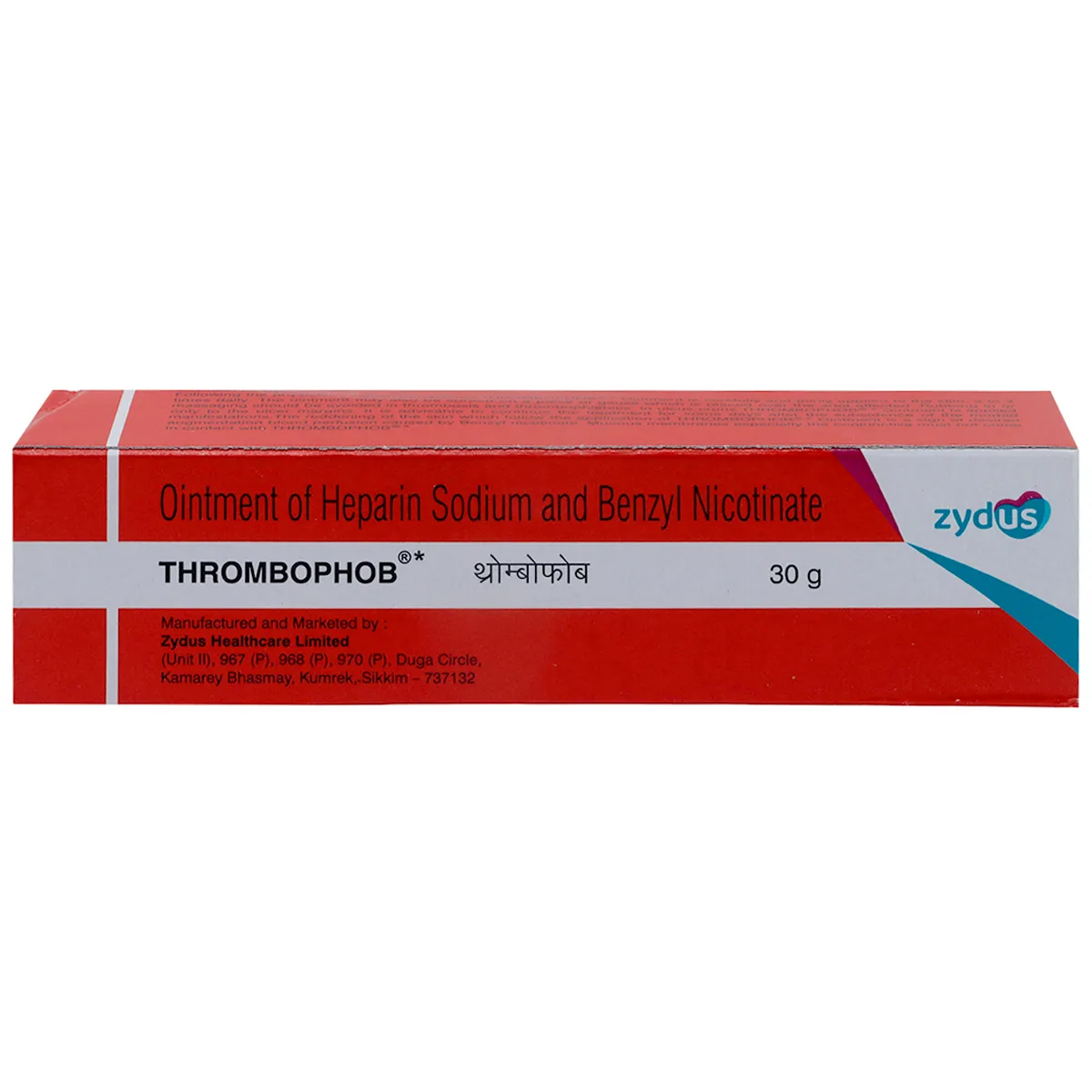
Thrombophob Ointment is intended for application to the skin over areas affected by conditions such as superficial thrombophlebitis, bruising or hematoma. Its two ingredients perform different functions at the application site. Heparin has anticoagulant activity and is used topically in preparations intended to support the resolution of superficial blood collections and clot-related local swelling. Benzyl Nicotinate acts as a local vasodilator, increasing superficial blood flow in the treated area.
The combination is therefore used to manage local symptoms such as swelling, tenderness and discomfort associated with superficial vein inflammation or minor blood collections beneath the skin. Thrombophob is for external use only and should not be applied indiscriminately to unexplained swelling or skin lesions without medical assessment.
Uses
- Symptomatic treatment of superficial thrombophlebitis.
- Management of bruises and localized hematoma.
- Helps reduce localized swelling associated with superficial blood collections.
- May help relieve tenderness and discomfort in affected areas.
- Used for selected superficial vascular conditions when topical treatment is appropriate.
Key Benefits
- Combines Heparin with Benzyl Nicotinate in one topical preparation.
- Heparin supports the management of localized superficial clot-related changes.
- Benzyl Nicotinate promotes local blood flow in the treated area.
- Can help reduce discomfort and swelling associated with bruising and superficial vein inflammation.
- Ointment formulation is suitable for direct application to affected skin.
How to Use
- Apply Thrombophob Ointment as directed on the label or as advised by your doctor or pharmacist.
- Clean and gently dry the affected area before application.
- Apply a thin layer over the affected area and spread gently unless the product instructions advise otherwise.
- Wash your hands before and after application.
- Avoid vigorous rubbing if the affected area is painful, recently injured or significantly swollen.
- Do not apply the ointment to open wounds, broken skin or infected areas.
- Avoid contact with the eyes, mouth and other mucous membranes.
- Do not cover the treated area with an airtight dressing unless advised by a healthcare professional.
- Stop self-treatment and seek medical advice if swelling, pain or discoloration persists or becomes worse.
How It Works
Heparin acts locally on the coagulation process and is included to support the management of superficial clot-related conditions and blood collections beneath the skin. Benzyl Nicotinate produces vasodilation in superficial blood vessels, increasing local circulation where the ointment is applied. Together, these actions are intended to support the reduction of local swelling and discomfort associated with superficial thrombophlebitis, bruises and hematoma.
Side Effects
- Mild redness at the application site.
- Burning or warmth after application.
- Itching.
- Local skin irritation.
- Rash or other sensitivity reactions.
- Increased skin discomfort in sensitive individuals.
Stop using the ointment and seek medical advice if severe irritation, significant swelling, blistering or an allergic reaction develops.
Precautions & Warnings
- Do not apply Thrombophob to open, damaged, ulcerated or infected skin unless specifically instructed by a healthcare professional.
- Avoid using the ointment if you have a known allergy to Heparin, Benzyl Nicotinate or any other ingredient in the formulation.
- Tell your doctor if you have a bleeding disorder, very low platelet levels or a history of unusual bleeding before using the product regularly.
- Do not massage a severely painful, acutely swollen or unexplained area until the cause has been assessed, particularly when a deeper vein clot is possible.
- Thrombophob is intended for superficial conditions and should not be used as a substitute for medical treatment of deep vein thrombosis or other serious vascular disorders.
- Tell your doctor if you are taking oral anticoagulants, antiplatelet medicines or other products that affect blood clotting.
- Seek urgent medical attention for sudden swelling of an entire limb, severe unexplained pain, chest pain, sudden breathlessness or coughing up blood.
- Avoid getting the ointment into the eyes or mouth. Rinse thoroughly with plenty of water if accidental contact occurs.
- Consult a healthcare professional before regular use during pregnancy or breastfeeding.
- Do not apply the ointment over large areas of skin for prolonged periods unless medically advised.
- Children should use the product only according to the label or advice of a healthcare professional.
- Stop use and consult a doctor if the treated area becomes increasingly red, painful, warm or develops discharge.
Storage Instructions
- Store below 25°C.
- Keep the tube tightly closed when not in use.
- Protect the ointment from excessive heat and direct sunlight.
- Keep the product in its original container.
- Keep out of reach and sight of children.
- Do not use after the expiry date printed on the package.
FAQs
Q: What is Thrombophob Ointment used for?
A: Thrombophob Ointment is used for superficial thrombophlebitis, bruises and hematoma, helping manage associated local swelling, tenderness and discomfort.
Q: What does Thrombophob Ointment contain?
A: It contains Benzyl Nicotinate 2 mg and Heparin 50 IU.
Q: Is Thrombophob Ointment a prescription medicine?
A: It is generally marketed as a non-prescription topical preparation. Follow the product label or seek professional advice when symptoms are persistent or significant.
Q: Can Thrombophob be used on an open wound?
A: No. It should not be applied to broken, ulcerated or infected skin unless a healthcare professional specifically advises it.
Q: Can Thrombophob be used for a deep vein blood clot?
A: No. A topical ointment should not be relied upon to treat deep vein thrombosis or another serious internal clot. Such conditions require prompt medical evaluation and appropriate treatment.
Q: What should I do if the area becomes more swollen or painful?
A: Stop self-treatment and seek medical advice, especially if the swelling is sudden, extensive or associated with severe pain, chest discomfort or breathing difficulty.

Reviews
There are no reviews yet.